Sugar & Silicon Valley: How Louisiana’s Sugarcane Industry Is Planting the Seeds of a Tech-Driven Future
Record harvests, rising startups, and the century-old organization holding it all together
There is a rhythm to South Louisiana that most of the country never feels. Starting each fall, before sunrise, cane trucks rumble down two-lane roads toward the mills. Steam curls into the cool morning air. Fields that were emerald green all summer are stripped bare in a weeks-long sprint to beat the first hard freeze. This annual ritual has repeated for more than two centuries in the bayou parishes—and in 2025, it produced numbers that no one in the state’s history had ever seen.
Louisiana’s sugarcane industry just closed the books on a record-shattering harvest: nearly 18 million tons of cane ground, 248 pounds of sugar recovered per ton (an all-time efficiency high), and more than 2.2 million tons of raw sugar produced. For the second consecutive year, the Pelican State outpaced even Florida, the nation’s other sugarcane powerhouse. Sugarcane is now planted across more than 25 parishes on roughly 500,000 acres, supports nearly 20,000 jobs, and generates an annual economic impact exceeding $4 billion.
But behind those headline numbers lie a complex tangle of challenges—labor shortages, rising input costs, climate volatility, and a federal policy landscape that growers say isn’t keeping up. Increasingly, a new generation of entrepreneurs, researchers, and advocacy organizations are stepping in to help one of America’s oldest agricultural industries evolve for a new century.
 The American Sugar Cane League: A Century of Stewardship
At the center of Louisiana’s cane belt sits an organization that has been the industry’s backbone since 1922: the American Sugar Cane League (ASCL).
Incorporated over a hundred years ago when cane diseases threatened to wipe out the entire Louisiana sugar industry, the League was originally created to fund a research program that could combat plummeting yields. Today, it has expanded far beyond that original mandate, uniting growers, millers, and researchers through advocacy, education, and collaboration.
The League’s influence is felt in Washington, D.C. and in the fields alike. Its general manager, Jim Simon, regularly speaks on the industry’s resilience and its commitment to scientific, sustainable practices. In 2025, the League successfully backed Louisiana becoming the first state to ban artificial sweeteners in school meals—a policy statement that reinforced the value of real sugar and real farming.
In early 2026, the ASCL unveiled a modernized website and new logo, signaling an organization that is intentionally updating its public presence for a digital era while staying rooted in its grassroots mission.
What’s Making News at the League Right Now
The ASCL’s news feed paints a vivid picture of an industry in motion:
- “Boots on the Ground” (March 2026): As spring arrives, growers are back in the fields, watching the first green shoots push through the soil. Pre-emergent spraying, rut repair, and equipment checks are underway—the unglamorous but essential work that sets the stage for every harvest.
- Louisiana Ag Hall of Distinction (March 2026): Three new inductees were honored, including an advocate for the sugarcane industry, underscoring the deep ties between Louisiana agriculture and civic life.
- “Congress Must Act to Support American Farmers” (March 2026): Sugarcane grower Chad Hanks traveled to Washington, D.C. to press lawmakers on labor shortages and inflation. Hanks, a first-generation cane grower farming 3,500 acres in southwestern Louisiana, described the mounting complexity of the H-2A visa program and the reality that input costs for machinery, fuel, and fertilizer have surged while farmers receive only about 24 cents of each grocery-store dollar. “It has become increasingly difficult to secure the help we need to plant and harvest our sugarcane,” Hanks wrote in a guest column for The Advocate. “Simply put, most Americans don’t apply to work on a farm during a hot and humid Louisiana summer.”
- “From Record Harvest to Winter Uncertainty” (February 2026): Following the historic 2025 season, a prolonged cold snap gripped much of the cane belt. LSU AgCenter Sugarcane Specialist Dr. Kenneth Gravois noted that while the record tonnage and recovery were cause for celebration, the real test is always what happens beneath the soil during winter dormancy. “Record recovery, with record tons, leads to record sugar production,” Gravois said—but added that the full impact of the freeze won’t be known until warmer temperatures coax the cane out of dormancy.
 The Science Behind the Sweet: Research as a Competitive Edge
Louisiana is the northernmost sugarcane-growing region in the world. That geographic reality means the margin for error is razor-thin. A single hard freeze at the wrong time can devastate an entire season. That’s why the partnership between the ASCL, the LSU AgCenter’s Sugar Research Station in St. Gabriel, and the USDA’s Agricultural Research Service Sugarcane Research Unit in Houma is so critical.
This three-way collaboration has been the engine of variety development for decades. The newest commercial release, HoCP 18-803, was made available to growers in 2025, joining a roster of varieties engineered over a roughly 13-year breeding cycle to balance yield, sweetness, disease resistance, and stubbling ability. Another standout, HoCP 14-885, is being widely planted thanks to traits drawn from wild sugarcane relatives—it’s early-maturing, extremely sweet, and maintains high yield across multiple harvests.
“250 years of producing sugar here in Louisiana, and we’re still doing it,” noted Dr. Jeff Newton of the LSU AgCenter. “The future looks quite bright. We have to maintain our scientists and research program to have a fighting chance to compete.”
Atticus Finger, who took over as the League’s Director of Research in mid-2025 following the retirement of longtime director Herman Waguespack, put it bluntly: “You can’t plant the same cane and use the same methods to protect it year after year. Out here, something’s always waiting to get you: bugs, weeds, drought, a freeze (or two) after the New Year.”
 The Rise of AgTech: Startups Rewriting the Playbook
If the League and research institutions represent the industry’s established pillars, a new wave of agricultural technology (agtech) startups represents its future.
Louisiana Economic Development (LED) has identified agriculture as a $13 billion annual growth sector in the state, and a growing cluster of companies is proving that Silicon Valley doesn’t have a monopoly on innovation.
Guardian Aerial — Drones Over the Cane Fields
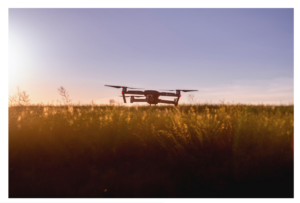
Guardian Aerial, a Woodworth, Louisiana-based precision agriculture startup founded in 2024 by former military helicopter pilot Clinton Giglio, is one of the most visible players. The company operates a fleet of 10 twelve-foot agricultural drones with a six-person team, spraying sugarcane and other crops across Louisiana with data-guided accuracy.
The pitch is compelling: a single drone uses about 10 gallons of product compared to the 800+ gallons a traditional crop-dusting airplane requires. It eliminates the human risk associated with low-altitude manned flights and reduces chemical runoff.
“By providing farmers with a drone, you avoid the risk of human life or a chemical spill,” Giglio told Technical.ly. “Although you can’t cover the same acreage logistically, it’s a different process and it’s worth it.”
LSU AgCenter testing has backed up the claims. Drone-treated sugarcane plots averaged 30 more pounds of sugar per ton after six weeks—matching airplane-applied results but with greater precision and lower cost. LSU AgCenter Assistant Professor Randy Price noted that drones excel in smaller or irregularly shaped fields where crop dusters are less effective: “Sugarcane does not need as much [ripener]. Sometimes they’re only 40 acres or smaller fields with trees around them, so the sprayer drones get the ripener down in the cane more accurately.”
Guardian Aerial plans to expand into industrial spraying and inspection services in 2026, building a regional brand from its Louisiana base.
FarmMind — AI for Farm Management
FarmMind, a Baton Rouge-based startup founded by LSU alumni and students, won the $100,000 American Farm Bureau Federation Ag Innovation Challenge for its AI-powered process management platform. The tool helps farmers streamline complex operational decisions—from planting schedules to resource allocation—using data analytics and machine learning. It’s exactly the kind of “brain behind the brawn” technology that a labor-strapped industry needs.
DMR Technologies — Drone Manufacturing Comes to Acadiana
The hardware side of the equation is growing too. DMR Technologies announced a $1.4 million investment to establish its first full-scale drone manufacturing facility in Lafayette, Louisiana, producing its Field Ranger X50 precision agriculture drone. The Acadiana site is expected to assemble 500 to 1,000 drones in its first year and could create over 500 jobs. Co-founder Ryan Case said the location—at the intersection of Interstates 10 and 49, between Houston and New Orleans, with access to the Port of Iberia and the Mississippi River—provides an ideal logistics footprint.
AI Meets Acadiana
Beyond named startups, a broader technological transformation is underway across South Louisiana. Farmers are deploying satellite imagery, AI-powered pest detection, and smartphone-based crop monitoring to manage fields more precisely. At one Napoleonville sugarcane farm, LSU graduate student Dulis Duron is working with grower Keith Dugas to build computer models that analyze drone images—stalk width, leaf color, canopy coverage—to predict sugarcane yields before harvest begins. Accurate predictions help farmers and mills time the grinding season more efficiently, reducing waste and cost.
As Gary Cross, the agricultural program lead at the University of Louisiana at Monroe, summarized: “Together, all these tools are revolutionizing our way of being more cost-effective, more environmentally conscious and creating better stewards of farming as a whole. It’s creating a new vision for what is possible.”
Policy, People, and the Road Ahead
Technology alone won’t sustain the industry. The human and political dimensions are just as critical.
Labor remains the sector’s most persistent headache. Sugarcane planting and harvesting are physically demanding, seasonal, and difficult to fully automate. Growers like Chad Hanks depend on the H-2A visa program to bring in migrant workers who legally enter the U.S.—many returning year after year—because domestic applicants are vanishingly few. But the program’s bureaucratic complexity is growing, and growers are calling on Congress to simplify it before it breaks.
Inflation on farm inputs—machinery, fuel, fertilizer, repairs—continues to squeeze margins even in record-production years. The USDA projects costs will keep rising. And while sugar prices have softened slightly, the 2025 season’s low harvesting and milling costs helped offset the dip. Still, farmers caution that one bad weather year could tip the balance.
Conservation is another emerging theme. At the 2025 Louisiana Farm Bureau Federation Convention, a homegrown farming innovation improving water quality in Acadiana drew significant attention—evidence that the industry is increasingly thinking about environmental sustainability alongside productivity.
And then there’s the next generation. People like Kassi Leger, profiled by the ASCL in late 2025, who left a career in sales in 2012 to return to her family’s sugarcane farm—and never looked back. Or Paul Van Mol, a first-generation farmer in Acadiana learning to fly drones and calling the technology “another tool we can use for timing.” Their stories suggest that the culture of cane farming, while evolving, isn’t going anywhere.
An Opportunity for Gulf Coast Venture Capital
For investors—particularly those focused on the Third Coast and Gulf Coast corridor—Louisiana’s sugarcane ecosystem represents a compelling intersection of legacy industry and emerging technology. The fundamentals are strong: a $4 billion economic engine, 229 consecutive years of commercial production, world-class research infrastructure, and a farmer base hungry for innovation.
What the ecosystem needs now is capital and operational support to help early-stage agtech companies like Guardian Aerial, FarmMind, and others scale. The challenges are real—labor, climate, policy—but so is the opportunity to modernize an industry that feeds the nation while employing thousands across rural Louisiana.
As Dr. Gravois noted after the record 2025 harvest: the favorable conditions allowed growers to get “probably as much field work done in the fall as I’ve ever seen during grinding season. All of those things bode well for a 2026 crop.”
Louisiana sugarcane has survived 250 years of hurricanes, freezes, droughts, and disease. It’s now entering its next chapter—one written with drones, data, and the same stubborn resilience that has defined the bayou parishes since the first stalks were planted on what is now Bourbon Street in 1751.
The cane is still growing. The question is who will help it grow smarter.
Sources: American Sugar Cane League (amscl.org), LSU AgCenter, USDA Agricultural Research Service, Technical.ly, Louisiana Farm Bureau News, KPEL News, Manufacturing Dive.